Beyond the Glass:
Expanding the World Nearby
Selected Tibetan Art


Such crowns were worn by monks conducting rituals and were often part of dance costumes used in public ceremonial performances. Each of the five registers contains one of the Tathagata Buddhas (right to left): Ratnasambhava (yellow), Amitabha (red), Vairochana (white), Amoghasiddhi (green), and Akshobhya (blue). With Vairochana at center, these Buddhas preside over the directional Pure Lands. A Newari artist working in Tibet probably was responsible for this amazing crown, which is one of the earliest examples to survive.


The ancient "silk route", running from the Mediterranean to Sian in east central China, made Central Asia a meeting place of many cultures. This lute, an extraordinary example of musical exchange between East and West, is similar to instruments played by angels depicted in seventh-century Buddhist cave paintings. It offers some insight into the development of the modern sgra-snyan. The body, with two skin-covered chambers, is a rare example of an archaic transitional form that seems to point to the Afghan robab, and various Himalayan lute types. Decorative elements, such as green-colored skins, like those of the damarn, and the portraits of Buddha and musicians, rendered on painted ivory with gold leaf, are typical of fifteenth-century Tibet. The back, fingerboard, and pegbox reveal cartouches and palmettes reminiscent of seventeenth-century Persia. Tin leafing shows through as a silvery underlayer in a worn section of the instrument. Painted gesso adheres to the surface, the result of an ancient gilding process known as adoratura. Originally, there were six strings attached to this instrument, but the pegbox was shortened to accommodate five, with a possible sixth string attached to a side peg. Despite the appearance of Buddha and his musicians, the sgra-snyan was not used in religious settings, but accompanied secular song.


Vaishravana is a complex deity who embodies many strands of Buddhist thought and belief. Tibetans understand him foremost as the primary guardian of the cardinal directions (lokapala), associated with the north. In this role he serves as a protector (dharmapala) of Buddhist law. Here, he sits on his snow-lion mount, accompanied by his eight generals, the Lords of the Horses (asvapati). Dressed as a warrior-king in full armor, he wears high boots that allude to his Central Asian connections. Vaishravana is principally represented in Tibet in mural programs from the fourteenth and fifteenth centuries, such as those preserved at the Shalu and Gyantse monasteries. Versions on cloth of this scale and pictorial sophistication are extremely rare.
Experience Tibetan Culture in New York City
*Explore the map. Click a pin to discover a place, or drag to explore.
Music, Dance, and Performance
Tibetan cultural and religious performances continue to shape community life in New York City, and is especially present in neighborhoods like Queens.
Community dances such as Gorshey bring people together through dance and music. These shared dances unite the Tibetan community while also sharing their culture with people from other backgrounds.
Tibetan musical traditions continue through live performances and cultural festivals. Music remains a central aspect of Tibetan culture, connecting communities in the city and abroad.
Organizations like Tibet House US offer virtual performances and host online events that feature a wide range of musical styles. Past performances can be explored online, including events like Laurie Anderson Performs for Tibet House US.
Traditional instruments are also an important part of Tibetan music. The dranyen (Tibetan lute) is one example that is often used in performances.
Buddhist temples are places for devotion and protection where people gather to pray and reflect.
These practices often connect to Vaishravana, the protector of Buddhist teachings. His image appears throughout temples.
In Tibet, places like Shalu Monastery reflect these practices through detailed murals and a focus on Buddhist teachings. The deity Avalokiteshvara is especially important and appears throughout the monastery, along with others like Vaishravana.
Religion and Temples
SELECTED WORK
Museums and Cultural Centers

Tibetan culture has been preserved through museums and cultural institutions that can be experienced both in-person and virtually.
Rubin Museum of Himalayan Art
The Rubin Museum of Himalayan Art presents Tibetan culture through preserved art pieces and immersive experiences such as the Tibetan Buddhist Shrine Room.
The room includes ritual objects and artwork. It replicates how these items would be presented in a household shrine. It is currently located at the Brooklyn Museum.
Tibet House US
Tibet House is a nonprofit cultural and educational center established to raise awareness of Tibetan culture. Its mission is to collect and protect donated Tibetan art and artifacts.
Tibetan Museum (Staten Island)
The Tibetan Museum is designed to mimic how a Tibetan Buddhist monastery looks in the mountains, drawing inspiration from the Potala in Lhasa. It features art pieces from Tibet, Mongolia and northern China.
The museum also has programs that allow people to engage with Tibetan culture, including yoga, tai chi (with a range of levels), meditation and workshops. Some programs may require registration or a fee.

Click the image to explore this virtual experience.
Traditional Food
Tibetan culture can be experienced through food. Restaurants like Cafe Himalaya, Lhasa, and Cafe Tibet serve traditional dishes. Few places are only Tibetan, and many also serve dishes from other cultures.
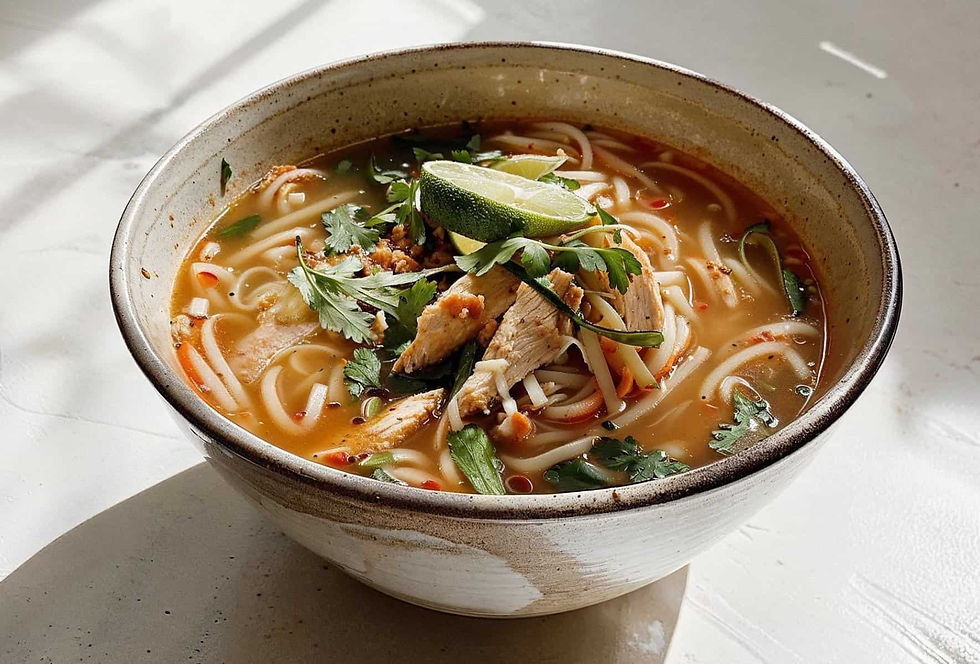
Popular foods include momos (dumplings), which are often eaten during special occassions like Losar (Tibetan New Year), tingmos (steamed buns), and thukpa (noodle soup with vegetables and/or meat).
Tibetan culture remains present in the city, providing ways to connect through traditional foods.